


Lounge - Groups & Events
0.00.00 Reviews
App Specs
- Version
- 33.6.0
- Updated On
- License
- Free
- Downloads
- 10,000+
- Developer
- Lounge Technology
- Categories
- Events
- Platform
- Android
Screenshots
 Analysis by AppCompare
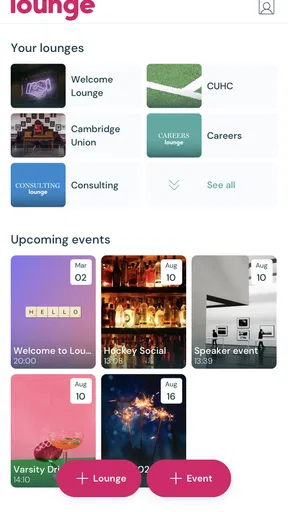
I find Lounge most useful when a group already has something to organize but does not want that activity buried inside a noisy social feed. It is an events app from Lounge Technology, built around bringing groups and their events into one focused place. The idea sounds simple, but that simplicity changes how I approach planning: instead of opening a broad social network and getting pulled into unrelated posts, I can treat the app as a dedicated room for the people and occasions that matter to me.
That makes it a particularly interesting option for clubs, casual communities, recurring meetups, and friend groups that need a shared point of reference. It is free to use, carries a Teen content rating, and has reached over ten thousand installs. Those details do not tell me whether it will fit every group, but they do place it in the category of a lightweight community tool rather than a large, established all-purpose platform.
My overall impression is that Lounge works best when the goal is clarity. It is not the app I would choose simply to browse endless public content, and I would not expect it to replace a full project-management system. Its value appears when a group wants the event itself to stay central, with conversation and coordination kept close to that event instead of scattered across unrelated channels.
From a loose idea to an organized group event
I find the shift from a loose suggestion to a clearly owned event is the real test of a group-planning app. In this section, I look at how I would give an idea a home, make the details easy for latecomers to follow, and keep the organizer’s next steps visible. That groundwork also makes it easier to judge what happens when several people start using the space at once.
Starting with the real problem
Imagine a group of friends trying to arrange a weekend activity. At first, the plan may live in a chat: one person suggests a date, another asks who is coming, someone else changes the meeting point, and later participants have to search through old messages to recover the final details. That is the starting condition where Lounge makes the most sense to me. The problem is not a lack of communication; it is that communication and the event are mixed together.
I would begin by treating the group as the home for the people who need to stay involved, then use the event as the more specific space for the occasion itself. That distinction is important. A recurring club may have one stable group but many separate events. A one-time gathering may need only a temporary focus. Thinking in those terms before inviting anyone helps prevent the common mistake of creating a new conversation for every small update.
The app’s store summary describes a focus on groups and events without distractions, and that is the lens through which I would use it. I would not join expecting a general-purpose timeline or a broad discovery service. I would join because I want the relevant people, the relevant occasion, and the relevant discussion to remain connected.
Worth Reading Before You Choose

EA SPORTS FC Mobile 26 Is a Bigger Football Game, but It Takes Time

Flipboard Shows What News Apps Must Do Beyond the Feed

Switching to Android Auto Means Rethinking Your Driving Routine

Google Calendar Makes a Crowded Week Easier to Manage

Ludo King Makes the Most of the Minutes Between Plans

Baby Panda World Brings Quick Play to Modern Phones, but Its Game Library Feels Busy
Building the first useful space
The first practical test is whether a group can understand what it is for without a long explanation. I would give the group a clear identity tied to its purpose rather than using an inside joke that new members will not recognize. For example, a neighborhood walking group benefits from a name that makes its subject obvious, while a private friend gathering can be more informal.
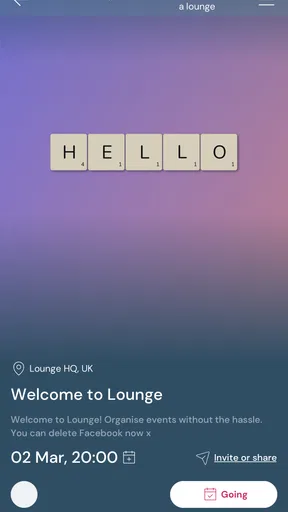
Once the group is ready, I would add the event with the information people need before they respond: what is happening, when it takes place, and where they should meet. The useful habit here is to write the event as if a latecomer will read it without seeing the earlier planning conversation. That reduces repeated questions and gives the event a stable reference point.
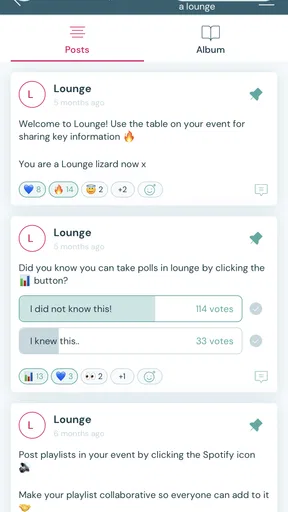
This is one of the less obvious strengths of an event-centered workflow. In a normal chat, the person who joins last often receives a pile of partial explanations. In Lounge, I would make the event description the authoritative starting point, then keep later messages for decisions, changes, and questions. That separation creates a cleaner handoff from organizer to participant.
Moving from invitation to participation
The next step is inviting the right people, not simply as many people as possible. A small group with a clear purpose is easier to coordinate than a large audience where nobody knows who is responsible for the next decision. I would first bring in the people who are genuinely expected to attend or help, then let the group grow naturally if the event needs more participants.
For a recurring activity, I would also avoid using one event as a permanent noticeboard. A group can remain the long-term home, while each new date gets its own event. That gives members a cleaner way to distinguish an old plan from the next one and makes it easier to discuss changes without rewriting the history of previous gatherings.
There is a trade-off here. A focused app can make a small community feel organized, but it also depends on people accepting one more place to check. If everyone already lives in a busy messaging app, some members may continue replying there out of habit. The organizer then has to establish a simple rule: the event space is where final details live, while other chats can remain informal.
Handling the handoff between organizer and group
The handoff is where many event tools either prove their value or become another source of confusion. I would use the organizer’s initial event information as the first handoff, then make later changes explicit. If the location changes, I would post the new location as a clear update rather than quietly editing several details and assuming everyone will notice.
This approach matters because participants do not all read an event in the same way. Some will check immediately, some will return shortly before the event, and some will depend on a friend to explain what changed. A focused event space gives the organizer somewhere to repeat the final decision without forcing everyone to reconstruct it from a long conversation.
For a group with several volunteers, I would agree in advance on who is responsible for updates. Lounge can help keep the information together, but it cannot replace ownership. If three people post different versions of the plan, the app will not magically decide which one is correct. The best result comes when one person publishes the final wording and others use replies or group discussion to raise issues before that point.
I also see value in using the group as a continuity layer. If one organizer becomes unavailable, another member should be able to open the group, identify the event, and understand the current plan. That is a better handoff than relying on a private conversation that only one person can access. It is a small organizational habit, but it makes community events less fragile.
A realistic everyday workflow
Here is how I would use Lounge for a casual Saturday board-game gathering. I would create a group for the regular players, add the specific Saturday event, and write the essential details in a way that does not assume everyone remembers the previous session. I would then invite the expected players and use the event conversation to settle the start time and any practical questions.
If one player offers to bring extra games, that information belongs in the event discussion because it affects this particular meeting. If the group later decides to meet at a different venue, I would make that change visible in the event rather than leaving it in a separate personal chat. On the day itself, a participant who needs clarification has one obvious place to look.
Afterward, I would keep the group for the next gathering but avoid treating the completed event as the next event by default. Creating a fresh event for the following session preserves the distinction between what happened and what is planned. That workflow is more deliberate than simply continuing one endless chat, but it is also easier to review when plans become regular.
What the workflow produces
The outcome I want is not a larger conversation. It is a shared understanding of the plan. Participants should know which group they belong to, which event they are discussing, and where the latest practical information is located. When that happens, Lounge earns its place on the phone.
I especially appreciate this kind of structure for groups that are active enough to need coordination but too informal for a heavy administration tool. A local hobby circle, a study meetup, a volunteer activity, or a group of friends can benefit from a dedicated event trail without having to adopt the language and complexity of workplace software.
The result is less impressive if the group only meets once and already communicates perfectly elsewhere. In that situation, setting up a separate app may feel like extra work. Lounge becomes more convincing when the same people organize multiple occasions or when event details are frequently lost in ordinary chats.
Where the flow can break
The first point of friction is adoption. Every participant has to understand that Lounge is not just another place to receive the same messages. If the organizer creates a group but continues making decisions in a different chat, the app becomes a duplicate rather than the source of truth. The solution is behavioral, not technical: decide where final information belongs and use that place consistently.
The second weakness is the limit of a focused event model for complicated projects. If an event requires budgets, task assignments, document versioning, or detailed scheduling, I would look toward a dedicated planning or collaboration service instead. Lounge may keep the community conversation tidy, but it is not a substitute for specialized tools when the work itself becomes complex.
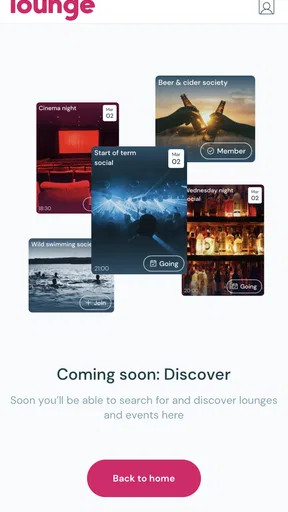
There is also a social limitation. Some people enjoy the distraction-free approach; others expect a lively public feed, recommendations, or a large network of strangers. Lounge is a poor fit for someone whose main goal is content discovery. Its appeal is narrower and more intentional: I use it to stay connected to selected groups and their activities, not to browse whatever happens to be popular.
Privacy and audience expectations are another reason to set up groups carefully. I would only invite people who should be part of that particular community and would avoid placing sensitive personal information in an event description. The Teen rating is a useful reminder that this is a social space intended for a teen audience and older, so families should still apply their own judgment about how younger users participate.
How it compares with familiar alternatives
Compared with a standard messaging app, Lounge offers a more deliberate separation between the group and the individual event. Messaging apps are usually faster when everyone is already there, and they are often better for urgent, one-to-one contact. Their weakness is that event details can disappear into a stream of unrelated messages. Lounge is the better choice when the group needs a stable place to return to.
Compared with a broad social network, Lounge feels more focused. A social network may be stronger for public reach, discovery, and casual engagement, but it can bring noise that has nothing to do with the event. I would choose Lounge for a defined community rather than a public campaign or a large audience-building effort.
Compared with a calendar app, Lounge is more community-oriented. A calendar is excellent for recording a date and protecting personal time, but it is not usually the best place for the social context around a gathering. I would use a calendar when my main need is a personal reminder, and Lounge when the group itself needs a shared home for the event.
Compared with a project-management tool, Lounge is lighter and less intimidating. That is an advantage for informal groups, but a disadvantage when responsibilities and deliverables need rigorous tracking. The right choice depends on whether the event is primarily a social coordination problem or a structured work project.
Who should try it, and who should skip it
I would recommend Lounge to someone organizing recurring small-group activities, especially when the same members need to coordinate several events over time. It also suits organizers who are tired of repeating the date, location, and latest change across multiple chats. The focused design is most valuable when clarity matters more than reach.
I would be more cautious if your community is already fully settled in another platform and refuses to change habits. In that case, the app may create a split audience, with some people checking Lounge and others waiting for messages elsewhere. I would also skip it for a large public event that needs promotion, ticketing, formal registration, or advanced operational controls.
Before committing a whole group, I would test the workflow with one real event. Invite a small set of participants, put the final details in the event space, and see whether people naturally return there for updates. That trial reveals more than a feature checklist because the central question is whether the group will actually use Lounge as its shared reference point.
My final take after following the full process
Lounge is a free events app by Lounge Technology that takes a clear position: groups and their activities should be easier to follow without the distractions of a broad social platform. In my experience, that focus is its strongest quality. It encourages me to think in terms of a stable community, a specific event, a clear handoff, and a visible final result.
The app is currently at version 33.6.0 and supports devices running Android 8.0 or later, which makes it accessible to many users with older phones as well as newer ones. I would still judge it primarily by the behavior of the group around it. The software can provide a focused setting, but the organizer must decide how updates are handled and where final decisions belong.
My recommendation is conditional but positive: choose Lounge when your main problem is scattered group-event coordination, not when you need a public social network or a full project-management suite. If your group is willing to give events a proper home and keep important updates there, it can turn a messy planning habit into a much clearer routine. If nobody wants to leave an existing chat, the extra app will probably feel like another inbox rather than a solution.
Pros
- Easy way to discover local groups and events based on shared interests.
- Useful tools for organizing meetups
- discussions
- and community activities.
- Encourages meaningful connections beyond one-to-one social networking.
- Event details and group updates are gathered in one convenient place.
- Suitable for finding niche communities that may be hard to discover elsewhere.
Cons
- Activity and event availability may vary greatly by location.
- Some groups may have limited updates or inactive members.
- The app may require notifications to stay informed about new activity.
- Privacy comfort can depend on how much profile information you share.
- Popular events or groups may fill quickly or have participation limits.
FAQs for Lounge - Groups & Events
What is Lounge - Groups & Events used for?
Lounge - Groups & Events is designed to help people discover, join, and participate in communities, group conversations, and local or interest-based events. After exploring the app, its main appeal is the ability to keep group interaction and event information in one place. It may be useful for social activities, networking, clubs, shared interests, and staying connected with people who have similar goals.
Is Lounge - Groups & Events free to download and use?
The app can generally be downloaded without an upfront charge, but availability of specific features may depend on the current version, region, or account type. Some services may include optional purchases, subscriptions, or paid event-related functions. Before committing to any payment, users should review the pricing details shown inside the app and check whether subscriptions renew automatically through Google Play or the App Store.
Do I need to create an account to use Lounge - Groups & Events?
An account may be required for the most important functions, such as joining groups, communicating with members, registering for events, or creating your own activities. Registration can also help synchronize information across sessions and provide personalized recommendations. Before signing up, it is worth checking which profile details are requested and reviewing the privacy settings so you can control what other members are able to see.
Can I find local groups and events in Lounge?
The app is intended to support group and event discovery, including activities based on interests, communities, or location. Results can vary depending on how active the service is in your area and how much information organizers provide. Users should confirm the date, venue, attendance requirements, and organizer details before making plans, since event information can change and not every listing will necessarily be equally reliable.
Is Lounge - Groups & Events safe for meeting or communicating with others?
As with any social or community app, users should combine the platform’s reporting and blocking tools with sensible personal precautions. Avoid sharing sensitive information, verify unfamiliar event organizers, and be careful when moving conversations outside the app. For in-person meetings, choose a public location, tell someone you trust where you are going, and leave immediately if the situation feels uncomfortable or suspicious.


